
Buying rental properties in Orange County or nearby areas can be a game changer for…
DSCR Loans: Finance Orange County Investments
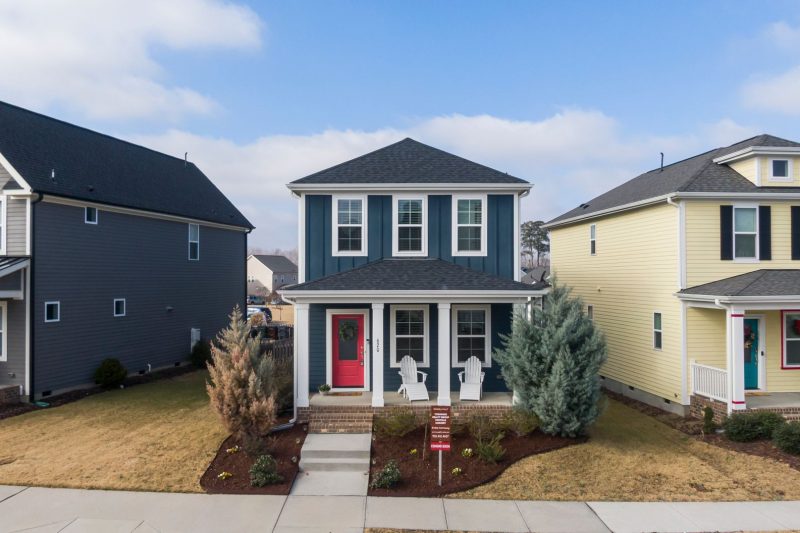
Investing in Orange County real estate can create valuable opportunities, but qualifying for financing based on personal income may complicate the process. A DSCR loan is an investment-property mortgage that primarily evaluates a property’s rental income against its proposed housing expense rather than relying mainly on the borrower’s personal income. In this guide, we explain how DSCR loan programs work, how investors can strengthen an application, and what to consider when financing Orange County rental properties.
Key Takeaways
- Purpose: DSCR loans finance non-owner-occupied rental properties using the property’s expected cash flow as a central qualification factor.
- Qualification: Lenders typically review market rent, proposed housing expenses, credit, reserves, property condition, and investor experience.
- Cash Flow: A stronger DSCR indicates that qualifying rental income more comfortably covers the property’s monthly debt obligations.
- Best For: These programs may fit real estate investors and self-employed borrowers whose tax documents do not fully reflect their investment capacity.
- Planning: Rates, fees, required reserves, prepayment terms, and underwriting guidelines vary by lender and scenario.
Quick Answers About DSCR Loans
- What does DSCR measure? It compares qualifying rental income with the monthly housing expense used by the lender.
- Is personal employment income the main qualification factor? Usually not. The property’s cash flow is central, although lenders still evaluate the borrower, assets, credit, and overall risk.
- Can a DSCR loan finance a purchase or refinance? Yes. Programs may be available for purchases, rate-and-term refinances, and cash-out refinances, subject to current guidelines.
- What properties may qualify? Eligible properties commonly include non-owner-occupied single-family homes, condominiums, townhomes, and smaller residential investment properties.
- How long does the process take? Timing depends on the appraisal, title work, property documentation, borrower responsiveness, and lender capacity.
At WestPac Lending (NMLS# 264390), we provide mortgage guidance for real estate investors, self-employed borrowers, homebuyers, and homeowners. With more than 26 years of mortgage industry experience, we help borrowers review how a potential loan structure aligns with their property, cash flow, and investment goals.
How Does a DSCR Loan Work?
Debt service coverage ratio, or DSCR, is calculated by dividing qualifying rental income by the property’s qualifying monthly debt obligation. The exact calculation varies by lender, but the housing expense often includes principal, interest, property taxes, homeowners insurance, and applicable association dues.
A simplified formula is:
DSCR = Qualifying Monthly Rental Income ÷ Qualifying Monthly Property Expense
A ratio at 1.0 means the qualifying rent equals the qualifying monthly expense. A ratio above 1.0 indicates that rent exceeds that expense, while a ratio below 1.0 indicates a shortfall. Lenders establish their own minimum ratios, pricing adjustments, and exceptions, so investors should verify current program guidelines.
For example, an Orange County property with strong market rent relative to its mortgage payment, taxes, insurance, and HOA dues may present a stronger DSCR than a similar property with high monthly association costs. This makes a complete expense review essential before submitting an offer.
Investors considering this approach can review our DSCR loan program for Orange County real estate for additional program information.
DSCR Loans vs. Conventional Investment Loans
DSCR and conventional investment-property loans can both finance rental real estate, but they generally use different underwriting approaches.
| Feature | DSCR Loan | Conventional Investment Loan |
|---|---|---|
| Primary income analysis | Property rental income and proposed housing expense | Personal income, debts, and agency rental-income rules |
| Typical use | Business-purpose financing for non-owner-occupied rentals | Residential investment-property financing under agency guidelines |
| Documentation focus | Lease or market rent, assets, credit, reserves, and property details | Income records, assets, credit, debts, and property details |
| Potential tradeoff | May have different pricing, down payment, reserve, or prepayment terms | May require more extensive personal-income qualification |
Neither structure is automatically better. The appropriate option depends on the borrower’s documentation, property cash flow, available funds, ownership strategy, and expected holding period.
How to Strengthen an Orange County DSCR Scenario
1. Analyze Rent Conservatively
Do not base the financing plan only on an optimistic rent estimate. Lenders commonly use an appraisal with a market-rent analysis, an existing lease, or a combination of the two. The amount used for underwriting may differ from the rent advertised by a seller or projected by an investor.
Compare the property with similar rentals based on location, size, condition, parking, amenities, and lease structure. Rental dynamics can differ between coastal communities such as Newport Beach and Huntington Beach and inland markets such as Anaheim, Fullerton, or Yorba Linda.
2. Include the Full Housing Expense
A basic mortgage estimate may omit costs that materially affect DSCR. Investors should account for:
- Principal and interest
- Property taxes, including potential reassessment after purchase
- Homeowners and landlord insurance
- Flood or other property-specific coverage when applicable
- HOA dues and special assessments
- Property management and maintenance in the broader investment budget
- Vacancy and turnover assumptions
Not every operating expense is included in every lender’s DSCR formula. However, those expenses still affect the investor’s actual return, so underwriting qualification and investment profitability should be evaluated separately.
3. Review HOA and Condominium Factors Early
Orange County has many condominium and planned-unit developments, particularly in Irvine, Costa Mesa, Tustin, Mission Viejo, and coastal areas. HOA dues can reduce the DSCR, while project-level issues may affect financing eligibility.
Before moving forward, review association dues, pending assessments, insurance coverage, rental restrictions, and any limits on short-term leasing. A property may generate attractive gross rent but provide weaker net cash flow after association costs.
4. Maintain Adequate Liquidity
DSCR lenders commonly require funds for the down payment, closing costs, and post-closing reserves. Reserve requirements vary based on credit, the number of financed properties, DSCR strength, loan size, and program terms.
Keeping additional liquidity beyond the minimum requirement may also help an investor manage repairs, vacancies, insurance changes, or unexpected association expenses. Funds must generally be documented from acceptable sources under the lender’s guidelines.
5. Compare the Entire Loan Structure
Interest rate is only one part of an investment loan. Review the following before selecting a program:
- Fixed-rate versus adjustable-rate structure
- Required down payment or available equity
- Points and lender fees
- Reserve requirements
- Prepayment penalty terms, if applicable
- Cash-out limitations
- Entity vesting options
- Loan maturity and amortization
A lower initial payment does not necessarily make a loan the most suitable long-term option. Investors should compare expected cash flow, total borrowing costs, exit strategy, and how long they plan to hold the property.
Orange County Property Considerations
Orange County includes a wide range of investment-property types and price points. Properties in Newport Beach, Laguna Beach, Dana Point, and San Clemente may involve higher loan balances, coastal insurance considerations, or specialized appraisal comparisons. Properties in Anaheim, Fullerton, Tustin, and Costa Mesa may present different rent-to-price relationships.
Investors should also consider:
- County loan limits: Conforming and high-cost county limits change, although DSCR loans do not necessarily follow conventional agency limits.
- Property taxes: The current owner’s tax bill may not reflect the buyer’s expected post-purchase obligation.
- Insurance: Premiums and coverage availability vary by property type and location.
- Local rental rules: Short-term rental regulations, permits, and HOA restrictions may affect projected income.
- Property condition: Deferred maintenance or health and safety issues may affect valuation and loan eligibility.
Properties with five or more residential units are generally treated differently from one-to-four-unit residential investments. Investors evaluating larger buildings can review information about financing multifamily properties with five or more units.
DSCR Loan Application Checklist
Documentation varies, but preparing the following items can make the review more efficient:
- Purchase contract or current mortgage statement, depending on the transaction
- Property address and estimated market rent
- Current lease and rent history when the property is occupied
- HOA information, if applicable
- Insurance estimate or current policy
- Asset statements for closing funds and reserves
- Ownership and entity documents when title will be held in an eligible business entity
- Real estate schedule showing other owned properties and related obligations
- Explanation of the investment plan, including intended use and holding period
As of 2026, program rules continue to vary significantly among DSCR lenders. Credit standards, eligible property types, valuation methods, reserve requirements, rates, fees, and prepayment provisions should all be confirmed for the specific transaction.
When a DSCR Loan May Not Be the Right Fit
A DSCR program may be less suitable when the property’s rent does not support the proposed payment, the borrower needs owner-occupied financing, or conventional qualification produces more favorable overall terms. It may also be unsuitable when local rules or association restrictions conflict with the intended rental strategy.
Other options could include conventional investment financing, a different down payment structure, or waiting until the property’s lease and operating history are better established. The goal is not simply to qualify for financing; it is to select a structure that supports the investment plan without placing unnecessary pressure on cash flow.
Review Your Orange County Investment Plan
We can help review a potential purchase or refinance, compare DSCR and conventional qualification approaches, and identify the documents needed for the next step. Investors in Irvine, Newport Beach, Huntington Beach, Laguna Niguel, Anaheim, and surrounding Orange County communities are welcome to call, text, or email us to discuss the property, estimated rent, available equity, and financing goals.
Steve Rivas, President of WestPac Lending, has more than 26 years of mortgage industry experience and is licensed in California, Florida, and Colorado under individual NMLS 287708.
Frequently Asked Questions
Can an LLC hold title to a property financed with a DSCR loan?
Many DSCR programs allow eligible business entities to hold title, but requirements vary by lender and state. The lender may review the entity documents and require personal guarantees from qualifying members.
How is rental income evaluated when the property is vacant?
A lender may rely on the appraiser’s market-rent analysis when a property does not have an active lease. The lender may apply its own calculation or adjustment, so the full advertised rent is not always used for qualification.
Can short-term rental income be used for a DSCR loan?
Some programs consider short-term rental income, while others use long-term market rent or require an established operating history. Local regulations, permits, HOA restrictions, and appraisal support can affect eligibility.
Do DSCR loans have prepayment penalties?
Some DSCR loans include a prepayment penalty because they are commonly structured as business-purpose investment loans. Investors should review the penalty period, calculation, and available alternatives before closing.
Can an investor qualify when the DSCR is below 1.0?
Certain programs may consider a ratio below 1.0 with stronger credit, additional equity, reserves, or other compensating factors. Availability, pricing, and required documentation vary, and approval remains subject to the lender’s current guidelines.
This is educational and not financial advice. Loan programs and guidelines can change. Talk with a licensed mortgage professional about your specific scenario.

About the Author
Steve Rivas
President at WestPac Lending · NMLS #287708
Steve Rivas is the founder of WestPac Lending, a Savi Ranch Financial, Inc. company, and has been serving borrowers since 1999.
Specializes in: Bank statement loans, FHA loans, Refinance loans
Licensed in: CA, CO, FL
Related Posts